Public health
Permanent, and preventable
Hearing lost to noise does not come back. One unsuppressed rifle shot can pass 160 decibels, well beyond the point of damage.
Read more
Hearing health. Conservation. Quieter communities.
We ask Democratic lawmakers to treat suppressors as what they are: hearing protection. For the hunter. For the kid standing next to them. For the neighbors down the road and the wildlife in between.
A Quieter Tomorrow. Hearing protection for every hunter, every family, every season.
First, the hard part
Gun violence is real. We are not here to argue about it, and we won't ask you to stop caring about it.
Nothing we ask for changes who can own a gun or how guns are sold. People barred from owning firearms stay barred. The added federal penalty for using a suppressor in a violent crime stays. States keep the right to set stricter rules.
This campaign is about one thing: the noise, and the permanent damage it does.
How loud is it
One unsuppressed rifle shot is loud enough to cause permanent hearing damage. A suppressor brings that shot down toward the level where damage begins. It is still louder than a chainsaw.
That is the whole idea. It is the same idea as a muffler on a car.
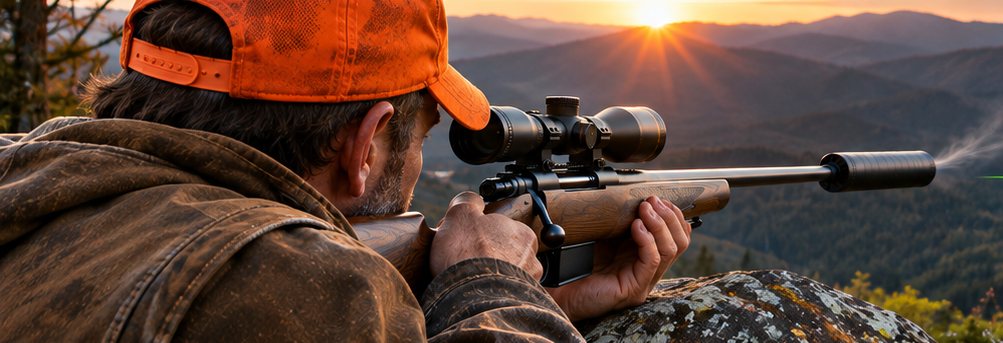
Approximate peak sound level, in decibels
The muffler standard
Everywhere else, we decided long ago that loud, dirty machines should be made quieter and cleaner at the source. Nobody calls that controversial anymore.
Every state requires a working muffler. Driving without one gets you a ticket.
Required
Catalytic converters have come standard on new cars since 1975. Cleaner air became the default.
Required
Workplace safety rules say to quiet the machine first. Earplugs are the backup, not the plan.
Required
For more than 90 years the muffler for a rifle carried a $200 federal tax and a registration wait that ran for months.
Taxed and discouraged
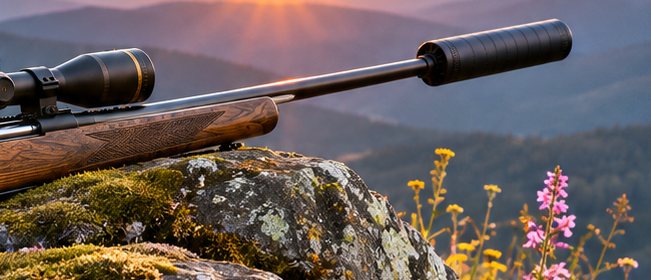
If a rifle were invented today, it would ship with one. We are not asking Congress to require a suppressor on every gun. We are asking it to stop making the safer choice the harder one. Read the full argument
Why access matters
When safety gear is hard to get, people go without it. When it is on the shelf, they use it. Public health has acted on that for decades.
Sold at every hardware store. Pay at the register and walk out.
No form. No fee. No wait.
In 2022 the FDA let adults buy them over the counter, because cost and appointments kept people from getting them.
Hurdle removed
In 2023 the FDA approved the overdose reversal drug for sale without a prescription so more people would carry it.
Hurdle removed
For more than 90 years: a $200 federal tax, a federal application, fingerprints, a photograph and a wait of months.
Every hurdle we could think of
We looked. We could not find another piece of safety gear in America that has ever required a federal tax, a federal application and fingerprints.
Every form, fee and wait removes some of the people who would have used one. The first to drop out are the first-time hunter, the working parent and the family on a budget.
Read why access is the whole ask
Why it matters
This is harm reduction. It protects people and places you already fight for.
Public health
Hearing lost to noise does not come back. One unsuppressed rifle shot can pass 160 decibels, well beyond the point of damage.
Read moreVeterans
Tinnitus is the most common disability claim at the VA, and hearing loss is in the top five. Hearing protection is veterans' care.
Read moreKids and families
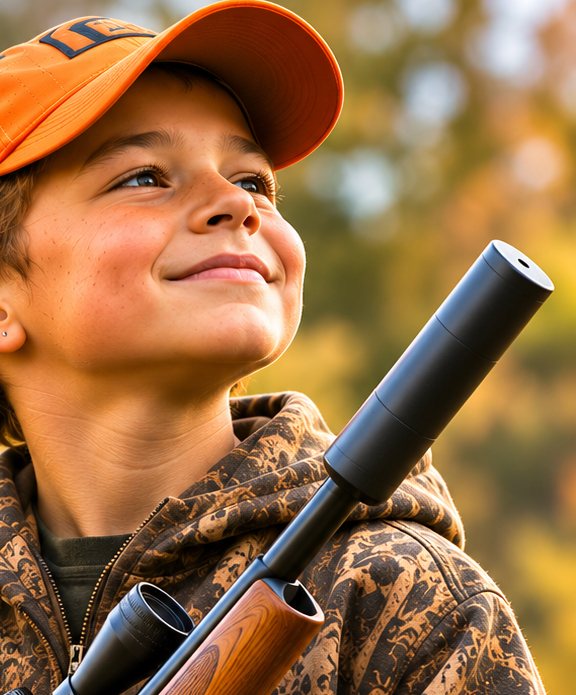
Earplugs protect only the person wearing them. A suppressor protects the kid, the partner and the dog standing nearby.
Read moreWorking families
Many families hunt to fill the freezer. A tax on safety gear is regressive. It lands hardest on rural and low-income hunters.
Read moreWorker safety
Range staff, instructors, guides and wildlife officers work around gunfire every day. Workplace safety starts with quieting the source, then adds earplugs.
Read moreHealth care costs
Hearing aids cost thousands of dollars and Original Medicare does not cover them. Untreated hearing loss is linked to isolation and a higher risk of dementia.
Read moreWildlife
Two decades of research show that noise stresses wildlife. Less blast means less disturbance around hunting land and ranges.
Read moreNeighbors
People who live near ranges and hunting land did not choose the noise. Quieter shooting is being a good neighbor.
Read moreHow Europe does it
Countries with far stricter gun laws than ours treat suppressors as ordinary safety gear. Hunters use them out of respect for their own hearing, their neighbors and the animals.
On guns, Europe leads on public health. On this one, we are behind.
Read how each country does it
What we're asking for
Today federal policy treats suppressors more like hearing protection than it has in generations. That rests on a tax cut Congress can reverse, one court ruling and one agency policy. Any of them can be undone.
Oppose any effort to restore the federal tax and registration on suppressors.
Treat suppressors as hearing protection in federal law, the same as earmuffs and earplugs.
Take suppressors out of the federal definition of a firearm. Keep the limits on prohibited buyers and minors. Keep the penalty for criminal use.
We call the full idea the SAFE Act: Suppressor Access for Families and the Environment. Read the plain-language summary.
The facts
No. A suppressed hunting rifle still measures around 130 to 140 decibels. That is louder than a jackhammer. Movies got this wrong.
Rarely. Peer-reviewed research and ATF's own data find suppressors in a tiny fraction of crimes. In most of those cases they were possessed, not fired.
Most don't. Hunters need to hear game and each other, so the plugs stay in the truck. Plugs also do nothing for anyone standing nearby.
Judge for yourself. We work on one issue: hearing. We tell you who started this and who pays for it further down this page.
"Silencers are very rarely used in criminal shootings."
Ronald Turk, ATF Associate Deputy Director, 2017 white paper
Reading
Voices
This campaign should be led by Democrats who live this. We are looking for our first three voices. No scripts. Your story, your words, your name on it.
You hunt, you vote for Democrats, and you are tired of hearing that those two don't go together.
This seat is open.
You came home with a ringing that never stopped, and you want the next generation spared.
This seat is open.
You see noise damage in your patients every week, and you know it didn't have to happen.
This seat is open.
Is one of these you? Write to us at hello@democratsagainstdecibels.org. A real person will answer.
Take action
Offices count personal stories from their own constituents. They throw out form letters. So we don't write one for you.
Use the House lookup and the Senate contact list. Write only to the people who represent you.
Your hearing. Your kid's first hunt. The range near your house. The patients you see. Two or three sentences is plenty.
Ask them to oppose bringing back the federal tax and registration on suppressors. Thank them for their time.
An outline, not a script
Dear [Representative or Senator],
My name is [your name] and I live in [your town].
[Your story, in two or three sentences.]
[One fact that matters to you. For example: tinnitus is the most common disability claim at the VA.]
Please oppose any effort to bring back the federal tax and registration on suppressors. Hearing protection should be affordable for every family that hunts.
Thank you for your time and for your service to our community.
[Your name and address]
For lawmakers and staff
A one-page brief, the bill summary and the research behind every claim on this site. If we got something wrong, tell us and we will fix it.
Who we are
Democrats Against Decibels is a grassroots campaign for hearing health, conservation and quieter communities. It was started by a hunter and veteran who believes hearing protection shouldn't be partisan.
We are building a coalition of Democratic hunters, veterans, audiologists and people who live near ranges. As they join, they will lead it, and their names will go here.
We write when there is something to do. We don't ask for money and we don't share your address.