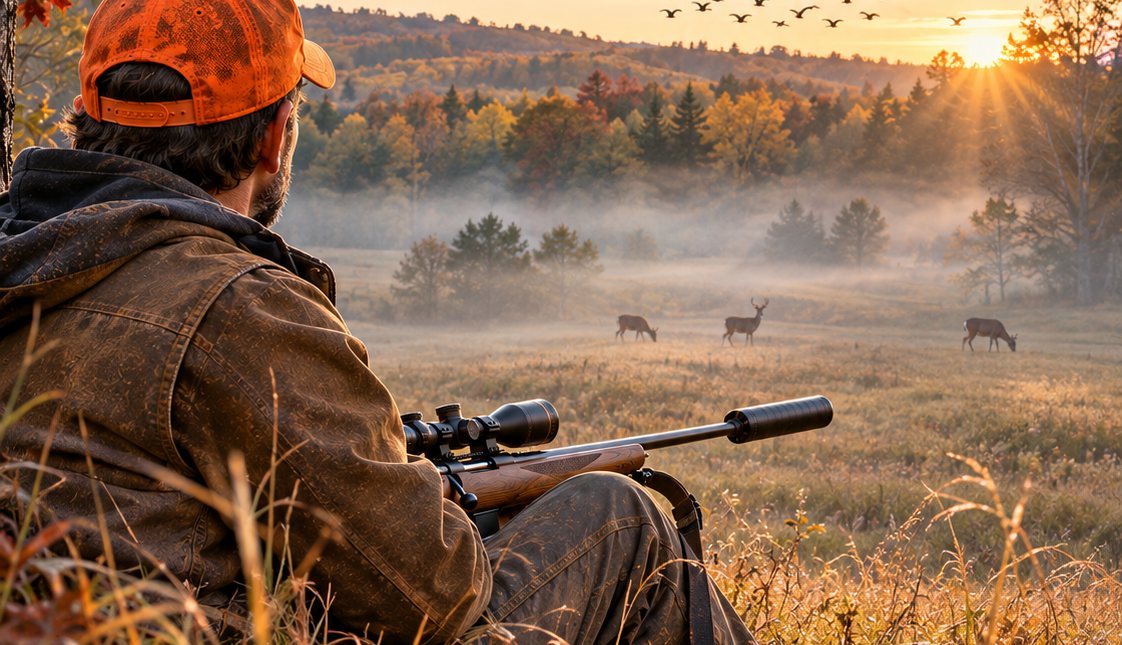
We already treat noise as pollution. There are limits on highways, airports and factories because loud sound harms people and animals. The same thinking applies outdoors.
What noise does to wildlife
A review of two decades of research found that noise changes how wildlife feeds, breeds and moves. Birds sing differently. Prey animals spend more time watching and less time eating. Many species simply leave places that are too loud.
A rifle shot is among the loudest sounds a person can make outdoors. It carries for miles across open country.
What a suppressor changes
A suppressor does not silence a rifle. It lowers the blast at the muzzle, which shrinks the area the sound reaches. Less of the woods hears every shot.
Hunters care about this more than anyone. They spend their seasons trying not to disturb the land they hunt. A quieter rifle is part of leaving a place the way you found it.
The neighbors
People who live near ranges and hunting land did not choose the noise. Rural residents, hikers, birders and everyone else who uses public land share the same soundscape.
In much of Europe, using a suppressor is seen as good manners toward the neighbors. It is the outdoor version of not running a chainsaw at dawn.
Quieter shooting also helps keep ranges open. Noise complaints put pressure on ranges to close, and when ranges close, shooting moves to places with less supervision.
What we ask
Treat suppressors as hearing protection and stop making them hard to get. Fund noise reduction at public ranges.
Clean air, clean water and quiet are all part of a healthy environment. This is a simple way to get more of the third.