Organized labor won a basic principle decades ago. When a job is dangerous, the employer fixes the hazard. The worker's protective gear is the last line of defense, not the first.
Safety professionals call this the hierarchy of controls. Remove the hazard if you can. If you cannot, engineer it down. Only after that do you hand someone earplugs and hope they fit.
Noise is a workplace hazard
Federal workplace rules follow the same order. When noise on a job site is too high, employers are expected to reduce it with engineering changes where that is feasible. Hearing protection fills the gap that is left.
That is why factories enclose loud machines and why construction equipment has mufflers.
The workers we forget
Thousands of people work around gunfire every day. Range safety officers stand behind the firing line for full shifts. Firearms instructors do it for entire careers. So do hunting guides, wildlife officers, police trainers and the staff of public shooting ranges run by state agencies.
NIOSH tells people at ranges to wear earplugs and earmuffs together. Its own evaluations have measured noise at ranges above its recommended limit. That is how serious the hazard is.
The engineering control exists
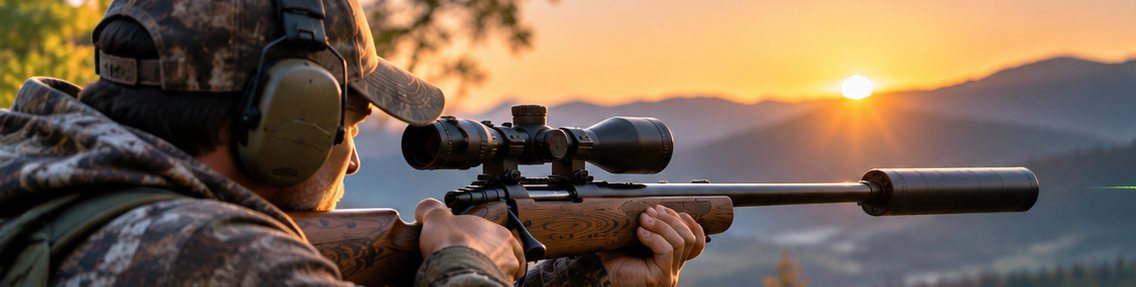
A suppressor is the engineering control for gunfire. It is a muffler. It reduces the noise where the noise is made, which is exactly what the hierarchy of controls calls for.
For most of a century, federal law made that control expensive and slow to get. In any other industry, a rule that discouraged the safer equipment would be a scandal.
What we ask
Treat suppressors as hearing protection in federal law. Fund quieter public ranges. Ask NIOSH to study and report on noise exposure for people who work around gunfire.
If we believe workers deserve protection at the source, that belief should not stop at the range gate.